Showing posts with label W. Show all posts

Tuesday, November 4, 2008

The Woman In White


Regarded as the first mystery novel, The Woman In White tells the story of Laura Fairlie, a young, beautiful heiress engaged to marry an older baron, Sir Percival Glyde. Before the marriage, a drawing master, William Hartwright, comes to Limmeridge House to give Laura and her half-sister, Marian Halcombe, art lessons. On his way to their country home, he crosses path during the night with a mysterious and troubled woman wearing all white.

Her appearance begins to unravel the secret of Sir Glyde, whom Laura Fairlie eventually marries. The marriage is doomed not only due to Glyde's obsession with keeping his secret in tact, but also because Mr. Hartwright and Laura Fairlie fell in love.

Throw in a truly terrific villian, Count Fosco, maids, cooks, doctors and lawyers all giving their own versions of the truth and what's left is an authentic mystery loaded with plot twists and turns developed through many interesting characters.

The author, Wilkie Collins, was a contemporary of Charles Dickens, although I have to admit that this was the only book of his I'd ever heard of. He's a talented author and uses several different voices quite convincingly to tell this story.

I appreciated the book more from a historical standpoint than its storytelling. While I found the first two-thirds of the book to be intriguing the climax of the story unfortunately happened with several hundred pages still left for the much less fun wrap up. Oh, several things still needed to be figured out for us readers to be completely satisfied, but, in spite of Collins putting Mr. Hartwright in danger a few times, the book became a little too comfortable and predictable. I knew the smooth ending was coming, but it took a long time to get there!

I'm glad I read it, though. It's very readable for being written in the mid 1800s, more so than Dickens, I would say, and an all-together entertaining story.

Tuesday, April 15, 2008

The Witch Of Blackbird Pond


I know this is a classic. A Newberry award winner for juvenile fiction, I can hardly criticize such a loved book. Sadly, I did not read this when it was meant to be read, as a youth struggling to know it's more important to do the right thing than to fit in with what everybody else is doing.

Important, worthy lesson, but after reading two young adult novels this week with very similar themes (does this happen to anyone else? I always seem to inadvertently read books in "themes"), I feel there is something lacking when an adult reads young adult literature. Innocence, perhaps. It's too simple. The protagonists don't fit inside the story. They are almost always ahead of their times and privy to understanding that their peers don't seem to have access to. Where did Kit come from? Barbados, yes...but possibly from the 20th century as well? As modern readers, we have the hindsight to see and learn from the foibles of our ancestors and their limited understanding, but the author gave this sort of vision to Kit immediately.

I don't know if this is ever argued (and why am I arguing, didn't I promise not to?) but part of me feels like there is an anti-obedience theme in this book. Kit is almost always disobedient, and her disobedience always turned out to be the right thing to do. Because it's young adult literature, everything turns out fine in the end, but there is a difference in doing the right thing and doing what you want to. This is a much deeper discussion to be typed out here, and I won't blaspheme this good book any more. I know it's a favorite.

What Came Before He Shot Her


I could write A LOT about this book. Mainly, how much I disliked it. Elizabeth George is probably my favorite crime novelist. I love her Inspector Lynley/Havers books. The first tragic flaw of this book is that neither characters are in the book.

In a nutshell, George takes her last book, With No One As A Witness, and writes a very, very long book with all the background for the criminal in that book. Yes, it humanizes the criminal. Yes, it paints a stark and awful background to the horrors of poverty and neighborhoods that breed crime. But the book becomes part of the horror as it goes on and on in its detail about the ugly.

In the end, there is no beauty to save it. I was just glad to be done with it. It was a hard book for me to read and I feel a little betrayed by George. If you like her too and haven't read this book - don't. Spare yourself the torture.

The Woods


I disliked the last Harlan Coben book I read (Dealbreaker) so much, that I thought I had sworn him off as an author, but after flying from Seattle to Taipei and finishing both of my books that I had brought already, I found myself in a bookstore at the Taipei airport hoping to find anything that I could buy, in English, that I had heard of.

I hadn't heard of this book, but I had the author and took a risk and bought it.

I loved it! This is my absolute favorite kind of thriller.

A teenage son of Russian immigrants, Paul attends a summer camp where a horrible quadruple murder takes place, one of the victims being his older sister. Years later, following the death of his father, the abandonment of his mother, and his prosecution of two wealthy college boys accused of raping a black stripper (hmmmm....ripped from the headlines?), questions regarding those notorious past murders and the history of his own family arise. Paul is confronted with the ugliness of blackmail and bribery, a past love affair and his own role in the gruesome affairs of that long-ago summer.

Complicated with a likable person to cheer for, The Woods will keep you guessing and wondering page after page. It was the perfect travel book.

I think I'll give Coben another chance.

Monday, April 14, 2008

Whose Names Are Unknown


Written at the same time of Grapes of Wrath about the same subject matter, Sanora Babb's book did not get published until a few years ago. The supposed reason was that humanity just couldn't handle another sad story about the sorry luck of the Midwest farmers during the dust bowl and depression of the 30s.

I learned many things that I didn't know that much about the depression. Very similar to the earlier Homestead Act, the government gave buffalo grazing land in the midwest, 320 acres, to anyone who would live on it, build a house on it and farm it. The drought-like conditions and its wind, in addition to all of the plowing, produced the life-sucking dust that ruined most of the area's farmers. I had always thought it was a freaky natural disaster and hadn't considered the man-made contribution. The loss of opportunity, loss of land, loss of trade, loss of collateral produced the desperate "okies" that migrated west looking for work. Another black mark on our own country's history, these "okies" were segregated out of the schools, the community and forced to work for pennies a day.

The most frustrating thing to me while I read this is that these people had no other options. They had to farm or do manual labor. Yes, the were oppressed. They were treated unfairly during a horrible time. Yet,some of these unlucky farmers could see the bigger picture. With that big picture in mind, they forced their children to go to school (where they were treated horribly for being dirty - because they had no place to get clean) so that they would have better options than they themselves had. Their children, however, recognized the struggle of their parents...how much their labor helped secure food and money and hated going to schools where they were despised and mocked.

You'd think this was all lose/lose, but the author showed how in the midst of all these struggles, that common decency, hope, love, genuine kindness still existed. It's hard to believe that this happened in our own country less than a hundred years ago.

If you can't tackle Grapes of Wrath (even if you can and have) this is worth your time.

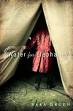
Water For Elephants

I've waited a couple of days to see if this book would grow on me. It didn't. The book uses the ever popular chapter/time switch by going back and forth between an old polish man, Jacob Jankowski, in an assisted living home and his memories of when he was with the circus. I've never liked circuses...perhaps that's my problem. The living conditions were dank and filthy and the behavior of the characters followed suit. I did like the portrayal of the old man who was 90 or 93 - he just couldn't remember. It must be so lonely and frustrating to age alone - without your spouse (he had been married for 61 years) or family other than on Sundays. I didn't get to know the character other than the few months the story takes place but the younger Jacob and the older Jacob didn't seem like they were the same person.

The author paints a pretty vivid picture of circus in the prohibition era. She admits that she did a lot of research and sort of threw it all into the book. So, a lot of crazy, over-the-top things happen to this one travelling outfit. It's interesting, don't get me wrong, and well written but just not a book to love. At least for me.

Wednesday, April 9, 2008

Wicked


This book takes the reader through the life of Elphaba who became the Wicked Witch of the West in the beloved Wizard of Oz. All sorts of thoughts went through my mind as I read this. At one time, I remember thinking, "This book is amazing! How the author juxtaposes the familiar wizard of oz with this new story is simply fascinating." Which is true. It is fun to read a new book with somewhat familiar characters. I thought at a different time, "Is the author on drugs when he wrote this?" because some of the novel is very strange and out there. I honestly couldn't even conjure in my mind some of his descriptions because they were so unfamiliar to me. I blushed at times because parts of the story is a bit crass. A few times, unnecessarily so and a few pertinant to the story. So, I guess I just justified the whole "poop in the brownies" analogy. If you're curious about that last statement, I'll let you know about it.

Overall, this book is a political satire. And a sort of discussion on the nature of evil. I'd recommend it. Very original considering it's about a well-known story.