Showing posts with label J. Show all posts

Tuesday, December 30, 2008

James and the Giant Peach


I shouldn't be allowed to read classic children's literature. My brain simply doesn't appreciate its intended purpose - creativity, imagination, fantasy. Instead, I wonder, "What's the point here?" Sometimes, there is a point, but I think with Ronald Dahl, the focus is placed on the magic and if there happens to be a story in there somewhere in it..so be it.

I borrowed it from the library because it was on the most-commonly-banned-books-in-America shelf and I wondered how the author of Charlie and the Chocolate Factory could upset so many modest American readers?

I still don't know. Unless there is some upsetting symbolism that went way over my head and would be sure to go over the head of its intended audience, I don't understand how this book could offend anyone but mean, crusty old aunts who don't love and take care of their orphaned nephews.

That being said, I wish I loved this non-controversial story, but I didn't. I thought it was overly strange. Strange in a did-you-write-this-while-tripped-out-on-LCD? kind of way. Giant talking bugs. Living in a peach. Flying over the Atlantic Ocean with the help of string tied onto 501 seagulls via the giant silkworm and spider. Landing on the needle of the Empire State Building in New York. A ladybug marrying a police man (What the?). O.K then.

James was surrounded by mean, nasty aunts and now he's happy and living in a giant peach in New York City's Central Park. Wildly imaginative but famous through the ages?

To make sure it deserved its fame, I had my eight year old son read it (even though the word a** is in it twice. Why did Dahl do that?) and he liked it. He didn't love it. Not because it was strange but because like most things he reads, the characters are magical and the plot bizarre. For him, it seemed almost standard fare. When he finished, he handed it back to me and I asked, "Did you like it?" "Yeah." That's it. No buzz. No acting out parts of the story and certainly no regurgitating details from it like he does with some of his other books.

I guess we're just a bunch of fuddy-duddies around here because I found nothing extraordinary about James and the Giant Peach except it's eccentricity.

Tuesday, April 15, 2008

Joan Of Arc

First of all, how embarrassed am I that I didn't really know the story of Joan of Arc? I thought it was about a girl soldier that was burned at the stake because she dressed up like a man.

This story is so much more complicated than that. This is a story about faith, courage, revelation, miracles, pride, power, corruption, martyrdom and enduring to the end. This is a story that is so astonishing that most should be thoroughly schooled in its details. It is very inspiring. In short, Joan of Arc's story could easily be found in any set of scriptures.

I find it interesting that Mark Twain wrote this book. He, a man of little to no faith and disdain for those who practiced it, clearly loved and admired Joan. Twain's familiar wit and satirical prose are all but absent within these pages. Instead, he writes as a man named de Conte, the fictional page and scribe of Joan, thus allowing himself to write with his own adoring perspective, without having to actually be Mark Twain. He called this the "best of all his books" and no doubt felt that way after a result of twelve years of research. As there is plenty of historical data available about Joan's life, including the full transcript of her trial, I have little doubt that this is a very accurate representation of her life.

On one hand, I like his choice in narration. As Joan's friend and scribe, Twain's de Conte manages to allow the reader to witness Joan's life from his own memory, a memory that included first hand accounts of most of Joan's life. And although his biting wit is extremely toned down, little glimpses are seen here and there through the telling of personal side notes.

On the other hand, the narration allowed the book to frequently become overly sentimental. Louis de Conte oft wandered away from the main story line to regale a story of the Paladin, or La Hire or his attraction towards Catherine de Boucher. In addition, I lost track of how many paragraphs were lent to remind the reader, once again, about Joan's saintliness. I feel it was unnecessary and writing it, over and over again, gave the book a "dumbed down" feel (which really is quite silly because this is NOT an easy read - I should have been grateful for any dumbing down). I think the caliber of her person, as well as her righteousness, were made obvious by her very actions, by her charity and by her speech. To point it out so often was overdoing it and eventually wore down my good opinion. I have a hard time loving a book that bored me at times.

That being said, this is an incredible book about an even more incredible historical figure. I could write and write about how much I loved Joan and her goodness, about her persecution and how much her story reminded me of Joseph Smith's. There are striking similarities, down to the resigned knowledge of their own endings. But they knew what they knew, they knew God knew what they knew, and they could not deny it. With their knowledge, they accomplished great works and forever changed the course of history. Read for yourself and become smitten with the power of a seventeen year old girl who became commander in chief of all the armies in France...because God told her to do it.

Thank you, Amy. I am so much more enlightened because you sent this to me. I can walk around with confidence knowing all I now know about the life of Joan of Arc.

Wednesday, April 9, 2008

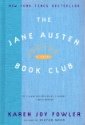
Jane Austen Book Club


I love Jane Austen. I love book groups. What should happen when these two worlds collide? Not what happened in this book. I was seriously looking forward to reading this. I even bought this book. O.K. . .so it was at a second hand book store but still, that was valuable credit that I'll never get back. I couldn't even finish this book. Part of me feels guilty because it's not fair reviewing a book without completing it but I just couldn't waste anymore time on this. More than halfway through and the recurring lesbianism/sex theme just didn't fit in. Hello! This is a supposed to adhere to Jane Austen ideals! I honestly wasn't expecting Pride and Prejudice or Mansfield Park or even Emma but there wasn't anything I liked about this book. Well, the writing was decent if not a little condescending but the characters were unbelievable and too extreme. The style of switching between the characters in the book club and their discussion of the book was choppy and unsatisfying. I didn't care. Get back to Jane Austen! Were we supposed to recognize the themes of the classic Austen stories in the lives of these pathetic creatures? Probably. I don't think the author succeeded. Time to move on.

Joseph Smith: Rough Stone Rolling


While reading this book, I think I recommended it to about every person I had a conversation with about it. Now that I'm actually finished reading it, I have mixed emotions. I'm not left with the feeling I wanted to have -- the triumphant "Praise To The Man" feeling. But I do feel grateful. Grateful for Joseph for the questions he asked, for the organization he established and for those early saints and their willingness to believe in what had to be SO hard to believe. Grateful for its continuation and the clear heads of the 12 apostles who didn't let the chaotic end of Joseph Smith's life translate into a chaotic religion.

The book serves its purpose - narrating the history of Joseph Smith's life. The author, Bushman, seems neutral throughout most of the book. He acknowledges early on that writing a true history about Joseph Smith is an almost impossible task. Defenders of his reputation write from the perspective of believers and disregard any story that finds fault with him. Other biographies are written by non-believers or former believers who have to discount any inspiration he claimed to have. Bushman, a believer but historian, writes Joseph as a prophet who made mistakes. I think that it is a fair assessment.

I started this book a bit nervous about what I would discover. I have never read much about him other than what the church publishes. The only bad stuff I had ever read was on the internet when I'd be searching for a primary sharing time idea. Googling can be dangerous. As I'd start to read, a sick feeling would start in my stomach and I would immediately stop. That was a road I didn't want to go down. I already knew most of the rumors but there aren't many "safe" answers to those questions in church literature. If you are not a church history scholar, chances are you don't know the real history of Joseph Smith. From primary on, we are taught his teachings, his testimonies and recalled versions of his early history. We are given a man who was a charismatic, beloved leader. A man who loved children, had a playful side and willing to suffer any amount of persecution to bring about the full restoration of the gospel of Jesus Christ. After reading this book, I think all of the above descriptions are true. That doesn't seem to be a rosy, post-mortem memory of a man. But he was not perfect and he didn't always do things perfectly. There seems to be two ways of interpreting his mistakes. Either he wasn't a prophet and and the mistakes were a result of a fanatic with the idea of creating an empire and failed due to lack of experience and implementation skill or he was a prophet and tried to carry out the will of God without a full understanding of the revelations at that time. At least that's my interpretation. The revelations he received were not all neatly understood and laid out to him like they are to us in the Doctrine and Covenants. They came and he wouldn't always recognize immediately its meaning or purpose. That's what was the most enlightening to me -- the setting that the prophet was in. What was the feeling and atmosphere during that time? The mood of the people, the religious frenzy, the political climate? Reading this book really helps a person understand the mentality of all involved from the early followers of Mormonism to his persecutors. I'm relieved that after reading this book, my testimony of the prophet is not shaken. The stories of the "bad stuff" did not shake me. In fact, it helped me to understand the prophet even more. I finished this book tonight and I feel melancholy. I hated the frenzy at the end. There was such intense hatred in such normal people. I ache for Emma and her suffering, isolation and loss. I recommend this book to anyone who is curious about Joseph Smith and when and why he did the things he did.