Showing posts with label E. Show all posts

Tuesday, December 30, 2008

Ella Minnow Pea


It wasn't until I told someone, out loud, what I was reading that I realized the title, Ella Minnow Pea, really sounded like the "LMNOP" of the alphabet song. Now, of course, I have no idea how I missed it. Ella Minnow Pea. LMNOP. Obvious. So obvious I wonder what else I missed. Such a clever title. Such a clever book.

Ella Minnow Pea resides on the fictional island of Nallop, off the South Carolina shore, where all the residents are brought up in reverence of syntax and language. The founder and most celebrated resident, Nevin Nollop, was the author of the well known keyboard practice sentence, "The quick brown fox jumps over the lazy dog." When the letter tiles creating this celebrated sentence beneath his statue begin to fall off, the self-righteous and clearly brainless members of the governing council take it as a sign that Nollop, himself, wants the usage of these letters to terminate. As a result, they ban all future use of the fallen letters. First "z" gets the ax, followed by "q" and "k". The residents of the island face severe and, frankly, far fetched punishment if the banned letters are used in writing, speech or music.

As the book is written through letters between friends and family members within the community, the reader witnesses first hand the difficulties in communicating without all of our precious 26 letters. Yes, we need our "z" and our "k"s, uncommon as they may seem. Life without the letter "d" is no life at all. End scene.

In spite of all of the author's cleverness, which is bountiful, I found this novel lacking. The author, Mark Dunn, brilliantly uses the English language in its most advanced form. While I'm sure I'm exaggerating, (but since this entire book is a satire, I feel it's appropriate here) I think at least 10% of the words throughout the book were words I had never seen nor heard before. Dunn either has an intimate knowledge of English vocabulary or an extremely thick thesaurus at his disposal. For language lovers, I've no doubt this book would be a delight.

For story, character, plot and reality lovers, however, the story isn't quite as accomplished. The author's not very subtle dig at organized religion as a vehicle for the blindly obedient to carry out the wishes of non-existent tyrannical beings got on my nerves. Likewise, the characters were so poorly developed that I was never quite sure who the letters were being written by or to whom they were being sent. As their relationships with each other was never the point of the book, however, I let it slide.

Ultimately, this is a show-off book about language but not one that really entertains or matters, because the story isn't funny, romantic, endearing, sad or slightly plausible. Just very, very clever.

Friday, October 24, 2008

Ellen Foster


When I was eleven years old, and in sixth grade, I remember getting a bloody nose during school. While I was holding the tissue to my hemorrhaging nostril, a mean-spirited girl, whose mom had already picked a fight with my mom because I didn't invite her daughter to my birthday party that summer, commented loudly to the rest of the class, "I bet she was picking her nose!"

I still remember the humiliation I felt as several people started chanting "nose picker! nose picker!" Humiliation remembered, 22 years later, even though mixed with that memory is a sixth grade full of good friends, a wonderful home to go home to, and eleven, equally drama-free years preceding it.

This memory of mine was triggered last night after reading this short book (only 144 pages) and I was left wondering what Ellen Foster would categorize as "humiliating" from her eleventh year, twenty-two years later.

Eleven year-old Ellen's entire family existence is the very definition of dysfunctional. Alcoholic and mean spirited father. Helpless, sad and sick mother. Cruel, angry and spiteful grandmother. Ellen finds a way to survive in each and every situation she unwillingly finds herself in, without any friends to lean on for support except a young black girl named Starletta.

Confused by the racial segregation and stereotypes that, while no longer enforced by law, are still enforced by popular belief in the South, Ellen observes a loving family in action while spending time with Starletta's family, her hippie art teacher and husband and later with the woman she calls her "new mama" - a foster parent.

Even though it created some frustration for me when normal details, like the names of the story's supporting characters, were left out, the author, Kaye Gibbons, never veers from her narrator's eleven year-old perspective. We readers are never privy to the background story of her parent's eroded marriage, the subsequent abuse and health problems, or what Ellen's world looked outside of Ellen's own view. It is Ellen's story, and she tells what matters to her - holes and all.

We stand by and watch Ellen going to more than her fair share of funerals, being made of fun of for her dirty clothes, uncombed hair, and crazy father who shows up for school drunk, holding money and shouting, "I'll pay you for it!", being forced by the court to go live with her grandmother who makes her go work the fields picking rows of cotton alongside her other "niggers" and then, finally cheer for her as she learns what it means to be loved and safe.

Honest, tragic, triumphant and heartbreaking - if only Ellen knew that she was supposed to be heartbroken, this is a fantastic glimpse into a young girl's horrifying world and how she fights to find a better one.

Tuesday, June 3, 2008

Everything Is Illuminated


This book is hard to piece together. It's even harder to write about.

If Everything Is Illuminated had to be categorized onto one shelf, I'd assign it a spot alongside other books about the holocaust. Or maybe about love. No, it's about friendship. Scratch that...it's really about loneliness.

Whatever it actually is about, Jonathan Safran Foer seems to be too odd of a man, and definitely too odd of an author, to define the book or narrow its focus. The minute the reader does, Foer changes the tempo and direction of the book. Sometimes, the stories of cruelty are cover-your-eyes horrible. Sometimes, the situations are uncomfortably obscene. Sometimes, the story and characters are folklorist-y bizarre. Sometimes, it's modern-age hilarious. A lot of the time, it's furrow-your-brow confusing. Everything definitely did not get illuminated for me.

With broad, sweeping strokes, I'll attempt to give a basic summary of the book. A young 20 year-old Jewish man, whose name also happens to be Jonathan Safran Foer, travels to the Ukraine in an attempt to track down a woman in a photograph named Augustine, who saved his grandfather from the Nazis. To help him, he hires a tour guide/translator named Alex, whose English appears to have been mostly learned directly from a thesaurus. The nouns and verbs he chooses are almost always slightly off, but kind of, sort of close, and the reader is forced to translate almost all of Alex's narrative into actual English. Part of the book is written as letters from Alex to Jonathan as explanations for his translations and editions. Some of it is what the character Jonathan Safran Foer writes as his novel (after his return from his trip) and some of it is narrative of the actual trip, given by Alex. When the parts are put together as a whole novel, the reader is forced to be quite patient and thorough to finish the book actually understanding all of what happened, and even more willing to be content with its loose ends that will never be tied.

While Alex's broken English can certainly be funny, it slows down the pace of the novel (because it's impossible to read it fast) too much. Thankfully, his conversational skills do improve and his letters to Jonathan towards the end are much more accessible. Additionally, because both Alex and Jonathan are young and male, there is quite a bit of sexual humor that turns out to be quite harmless, and even slightly endearing, but still makes the overall effect a bit R-rated.

There are so many characters to keep track of and I'm not exactly certain if I figured out who was who and if they mattered. Ultimately, I think most didn't matter because, again, I think the take-home message is meant to be about the horrors of the holocaust and how good people can do bad things. If not, then I missed a whole lot.

If you do attempt this book, read it patiently. It might help to read it as part of a group effort. Then, perhaps if you're able to talk it through and everyone brings their own understanding into a collective whole, everything about this novel might actually BECOME illuminated.

Tuesday, April 15, 2008

The Emporer's Children


Taken from the title of a book one of the character writes called The Emperor's Children Wear No Clothes, this book undresses three thirty-year old friends in New York. Marina Thwaite - the beautiful and well-to-do "it" girl who is once again living with her parents, Danielle Minkoff - a smart and somewhat successful TV producer who has an affair with Marina's father and Julius - a gay man with extremely complicated motives, are friends from college who have the advantages that graduating from an elite Ivy League university, as well has knowing influential and important people give them. They live the enviable life of having made it in New York.

The "emperor" seems to be the intellectual elite played by Marina's father, Murray Thwaite: a respected, liberal, and wealthy man who has spent the majority of his life writing "truth". This truth is applauded, awarded and revered by most, as he a champion to the poor, the honest and the brave. It isn't until two men come to town, his own nephew, Fred "Bootie" Tubbs, and Ludovic Seely, an ambitious Australian aiming to launch a new magazine, that his title of truth-teller is challenged.

I didn't think the book jacket's description adequately described the book. The story is complicated and at times, parts of it seem irrelevant to the whole - particularly Julius's part. In fact, as I read this immediately after Plainsong, I couldn't help but think it was the same story only in a much glitzier city with much glitzier characters. The book matters only so far as the characters matter.

At its end is New York's and America's tragic 9/11. Most of the character's trajectories are altered by this event. Except, perhaps, Murray Thwaite - the actual emperor - whose existence remains mostly unchanged.

The subject matter can be ugly, the characters pompous and infuriating, but the book still sparkles because Clare Messud writes the satire so convincingly. Claire Messud is the person in the crowd (although you have to assume this is her own crowd she's shouting at) watching the parade declaring, "But they're not wearing any clothes!"

East Of Eden


LOVED. EVERY. BIT. OF. IT!

What a story! I've been typing book reviews for a couple of hours now and my mind is a bit shot, but I finished this last night and afterwards, I lay back on my pillow extremely satisfied just thinking about it. It's so rare that I read something that delights me from beginning to end. While there were a few turns on the journey that confused me and seemed to take the book in a different direction, his connecting all the characters, the stories and to do it with profound meaning is nothing short of brilliant. Now add the facts that he weaved in a little of his own personal history, and one of the oldest, and best known stories of the Bible and Steinbeck's brilliance is only amplified.

I'm always surprised when I love a classic. Perhaps because there are a lot that I haven't liked, or merely tolerated, but this was a joy to read. The characters are so multi-dimensional and interesting that their stories and development become almost personal. Adam, Samuel, Lee, Abra, Cal, Aron, Kate/Cathy and even Liza were real for me. Their homes were real. Their towns were real. Best of all, the consequences to their actions were real.

How do you summarize East of Eden? It's a story about good and evil. But most of all, it's a story about choice. For me, the central part of the book was the realization made by Lee, Adam and Samuel when they were dissecting the story of Cain and Able and their offerings. In one translation, the Lord rebukes Cain's offering by saying, "If thou doest well, shalt thou not be accepted? And if thou doest not well, sin lieth at the door. And unto thee shall be his desire, and thou shalt rule over him."

It was while reading a different translation that Lee, a Chinese servant, noticed a difference. In it, rather than saying "thou shalt rule over him" it said "do thou rule over him" They noticed that it wasn't a promise, it was an order. Such a difference got Lee wondering what original word different translations came from.

After years of studying with Chinese philosophers and a rabbi, the consensus was that the original Hebrew word, Timshel, actually means "Thou mayest". Therefore, the bible does not order that man triumph over sin or promises that it will. It says that the way is open. For if thou mayest...that mayest not.

Brilliant! Because that's what I think! Agency is so important to Heavenly Father that he allowed 1/3 of His children to leave him permanently. Of course we have a choice over sin.

Steinbeck leaves the story briefly in Chapter 34 when he writes a short essay about the one story that exists. He says,

Humans are caught - in their lives, in their thoughts, in their hungers and ambitions, in their avarice and cruelty, and in their kindness and generosity too - in a net of good and evil....A man, after he has brushed off the dust and chips of his life, will have left only the hard, clean questions: Was it good or was it evil? Have I done well -- or ill?

In uncertainty I am certain that underneath their topmost layers of frailty men want to be good and want to be loved. Indeed, most of their vices are attempted short cuts to love. When a man comes to die, no matter what his talents and influences and genius, if he dies unloved his life must be a failure to him and his dying a cold horror. It seems to me that if you or I must choose between two courses of thought or action, we should remember our dying and try so to live that our death brings no pleasure to the world.
We have only one story.

All novels, all poetry, are built on the never-ending contest in ourselves of good and evil. And it occurs to me that evil must constantly respawn, while good, while virtue, is immortal. Vice has always a new fresh young face, while virtue is venerable as nothing else in the world is.

This is what his book is about it. Man's struggle over good and evil. In a completely human story, Steinbeck captured THE story with his characters and storylines. This is a book I happily recommend to anyone and will buy for my all-time greatest books library.

Extremely Loud And Incredibly Close


I picked this book up two days ago to read the first page (I personally think you can tell a lot about a book from the first page) and was hooked. I'm in the middle of another book, which is a good book, but the jarring nature of the prose reeled me in. The first chapter is called, "What the?" which is exactly what I was thinking. I was instantly reminded of another great book, The Curious Incident of the Dog in the Nighttime, where you actually experience the book as well as read it. While I wouldn't want every book to be written like that, because it's a bit like riding a roller coaster in the dark with strobe lights, it sure is fun every once in a while.

Jonathan Safran Foer, the author, writes the tale of a nine year old boy named Oskar Schell, whose father was in the World Trade Center when the planes flew into them on September 11th. I think its fair to say that the boy becomes extremely troubled after his father's death, but with the unconventional childhood he had, it didn't take much to push him over the edge. His father was an atheist and Oskar never had the opportunity to experience the innocence most children are usually allowed. He was taught that he exists because his father and mother made love and his father's sperm fertilized his mother's egg and through meiosis and mitosis created a new human made up of cells. And when a person dies, they are gone and only their cells go on. After a period of time had passed and there was no recovery of his father's body, his mother buried an empty coffin.

This passage of the book is great: Oscar tells his mother, "It's just an empty box." "It's more than an empty box." "Why would I want to spend eternity next to an empty box?" Mom said, "His spirit is there," and that made me really angry. I told her, "Dad didn't have a spirit! He had cells!" "His memory is there." "His memory is there," I said, pointing at my head. "Dad had a spirit," she said, like she was rewinding a bit in our conversation. I told her, "He had cells, and now they're on rooftops, and in the river, and in the lungs of millions of people around New York, who breathe him every time they speak!"

That is how the parts that are narrated by Oskar are written. The dialogue is only differentiated by quotation marks, but there are very few, "he said"s or "she described"s. The author makes you pay attention to who is doing the speaking. But only when Oskar is narrating. It's part of experiencing Oskar.

The book also tells the story of Oskar's paternal grandparents. The narration changes when both tell their own story. When his grandmother writes, there are no paragraphs and no quotations marks. Lots of odd spacing and most sentences get their own line. She's kind of crazy herself which you know by how she reacts when watching Oskar in his school's play of Hamlet and her conversations with Oskar. Oskar's grandfather...well...that's when you really see crazy. The author uses the most license with him and parts of the book are downright bizarre. Like the eight pages with nothing on them. Or when he starts to write smaller and smaller so that two entire pages are just dark black scribbles because some many words are on top of themselves.

It's more than just tricks on the page, however. The story is really about grief and how Oskar chooses to grieve for his father and how Oskar's grandparents grieved after losing much of what they loved when their city of Dresden was bombed in World War II.

When Oskar finds a key in an envelope with the word "Black" written on it inside a vase in his parent's bedroom, he sets out to discover what it unlocks. He goes about this by finding every person with the last name of "Black" in the five boroughs of New York City and spends almost a year going out on the weekends to ask Aaron, Abel, Amber etc. if they know anything about the key. A few interesting characters and stories get told through this storyline, but the real beauty of this book is how it made me remember and react to the horror of 9/11 again. You kind of forget....with the War on Terror, and the Iraq War and all of the stories that have happened during the last six years how horrible it was to watch those burning buildings go down on live TV. The last 14 pages of the book are pictures Oskar got off of a Portuguese web site that had a picture of a man who had jumped from the building. He put them in reverse order and you see this body in the air going up. The wish of a nine year old boy.

This book is exactly what its title says it is. Extremely and incredibly written. It's different, but I sure liked it.

Eclipse


This is a warning to anyone who doesn't even want to look at a review of Eclipse until they've read it. Repeat, this is a warning. If you want to know nothing about the novel, look away (Chloe...I gave you fair warning!)

Here are my feelings about the third book in the Vampire series by Stephenie Meyers. Bella bugs. She really, really bugs and everyone lets her get away with it which ticks me off. I can hardly stand to be in her head when she narrates. And yet....

I loved it. Why? I have been asking myself that for over a day now, because most of these characters annoy me to no end, the writing isn't really that great, the dialogue downright cheesy and the story didn't progress enough for a book that was over 500 pages. I think the answer is that this story, this dangerous love story between Bella and Edward, evokes an actual physical response from me when I read about them. I guess I enjoy the tightening in my chest and the flipping of my stomach. I also love the conflict, the setting and the fantasy.

I don't know what to say about Bella. She is, by far, the best developed character in the series. We get to know her thoughts, her motivation, her reasoning and even though I think the author wants us to, I still really don't like her. She is suppose to be so mature for her age (would never let her mother jump out of airplane, because she is the parent figure in that relationship) but has some completely irrational and irritating need to suck the joy out of anyone who tries to do something nice for her, like give her a gift. That doesn't fit in with the personality of an old-soul. She's moody and unreasonable and I can't figure out why everyone wants to be around her because she seems like a downer to me.

Edward has been my favorite character throughout the last two books (even though he was disappointingly absent for much of New Moon and then when he was in it he could have been mistaken for Eeyore), but I don't think she progresses his character at all in the way she originally developed him. Edward was kind of the rebel/bad boy of the vampires in Twilight. There, he was independent and reckless, willing to take a huge risk by giving in to his attraction to Bella. Even though he was attracted to her, he still managed to show some personality. He was kind of sarcastic, enjoyed watching her squirm, a bit with his non-human abilities, and WAY more lighthearted than the uberprotective boyfriend he has turned into. I think he could still play a little more hard to get and independent. I think he needs a responsibility besides protecting Bella so that he has some of his own conflict. He at least needs to get mad at Bella when she deserves it.

The other characters are equally flawed, but not in the way that makes them believable. Jacob should be more jealous. Physically, he may have aged to 25 through his mutation, but emotionally, he is sixteen. Sixteen year olds don't always see the big picture and I think I would feel their connection more believable if there was more than their past friendship that left Edward out. Bella and Jacob have much more in common than Bella and Edward do, and their commonality should be the connection between them, not Bella's compassion or concern for Jacob's pain at becoming a werewolf or gratitude for his friendship when Edward left. I think the author tried to show their like-mindedness at times, like riding motorcycles (the ONE time Edward feels left out - but of course he handled it like a champ) but she didn't go far enough. It would make much more sense in the end when Bella realized she was in love with Jacob too. I think the author forced a realization that wasn't really there.

I liked the love triangle but never felt that Bella would, could or should choose Jacob. Edward was always the better choice and as we knew Bella's mind, we knew that he always would be. I can see what Meyer tried to build up for the next book, but unless Edward does something drastically to change, like gets a big ol' hard pot belly, Bella would never choose not to be with him. There is no competition. With all three books, that point has been hammered home.

Outside of the story, I have to mention my slight annoyance at Meyer's indifferent attitude towards her responsibility to her LDS teenage fans. She has to be aware of the craze that she has started. I had heard about it, but it really is a phenomenon here in Utah. I think her success is independent of her LDS background, but I do think when people, parents particularly, have that knowledge, they feel a little more safe allowing their children to enjoy these books. She actually reminds me a bit of Benji, from So You Think You Can Dance. I think it would be a horrible thing to become famous and be LDS. Automatic ambassadorship without being asked. As Benji horribly disappoints in that un-appointed ambassadorship, so does Meyer with this book. Teenage girls who read this will be exposed to another teenage girl who repeatedly thinks, says, feels that if you believe you're going to be with someone for forever, marriage is unnecessary and old-fashioned solution to progress a sexual relationship. It is only Edwards old-fashioned virtue, maturity and control that keeps Bella chaste. And her chastity annoys her. What a great message for girls who might be struggling with a similar situation. Chances are good, however, that most of the seventeen year old boys they want to be with don't have Edward's point-of-view. It's irresponsible to let the brakes be in someone else's power. But, like I said, Meyer certainly doesn't wear a Mormon badge and I don't think I'd judge another author harshly for doing the same thing. With my own awareness, though, I think she disappoints in this regard.

Eclipse is better than New Moon but Twilight is still my favorite book of the three. Regardless of ranking, Eclipse does its job and kept me entertained for hours.

Eat, Pray, Love


I should have written this last week when I finished it. I felt stronger about it than I do now and I know that'll show up in how I review it. I'll try to key up the memories.

I really liked parts of this book better than others. The book is broken down into thirds. 36 chapters (don't worry...they are shortish) for each experience. She does this because there is a string of beads used for prayer in India (along the lines of a rosary. In fact, according to Gilbert's research, the rosary was devised from it. Sorry. Can't remember the actual name of it)that is made up of 108 beads. It's a holy number. Divisible by 3 (obviously a holy number) and some other reasons. I really should have written this review last week.

Gilbert is a woman in her thirtees who has a successful writing career in New York City. At the start of the book, she is spending some time in Bali when she comes across a medicine man who tells her future. He tells her that she must come live with him for months and I believe it was that idea that sprouted her whole take-a-year-to-search-for-my-soul journey.

She then flashes back to the reason she needed the journey in the first place. When she turned thirty, the time came when she and her husband had decided they would start their family. Instead of simply feeling not ready, she felt strongly that she shouldn't be married anymore. She proceeded to go through an ugly divorce that dragged out for two years. During that time, she lost herself in another relationship with a different man and struggled with severe depression. With her very unique perspective, she found God.

She took a year off of life to see if she could find a balance between being in the world but not of the world (sound familiar?) She began in Italy for pleasure. This was my favorite part of the book. Not because it was about pleasure but her healing and voice are so pure here and I found myself wishing I could hang out with her. I liked her that much. Plus, Italy sounds like a dream.

Next she took herself to study Yoga and meditation at an Ashram in India. While I admired her for the sacrifice and discipline she discovered there, it was still so...selfish and some of her relationships bugged me here. I've never enjoyed the view from the top when it comes from other people. Maybe I'm petty. But I always doubt that they see what they really see. That's not what I saw when I was up there so I think you're wrong. But I know perspective changes depending on whose eyes are doing the viewing so I can't discredit her own sacred experiences. I just didn't enjoy India as much as Italy.

Then she goes to Bali and I liked it less. I'm making it sound worse than it is. I really liked this book. Her writing is so accessible, I felt like I was reading a letter from a friend. She's funny but not always ha-ha funny and several times I really felt uplifted. I liked her point of view, although it isn't mine. I was disappointed with how her year ended. I think she was happy with it though, and I suppose that matters more:)

Thursday, April 10, 2008

Everything Must Go


This is a brand new book out by Elizabeth Flock who wrote Me & Emma which is one of the best books I've read. She creates another fantastic character in Henry Powell, a boy who somehow lost himself working in a clothing store in the small town he grew up in. The writing is very circular which creates an uncertainty of the date although the author always begins the chapter with the year as its heading. It's not chronological and eventually, the reader is as lost in time as the character. I really felt like I knew Henry, almost felt like I was Henry by the end. Just fabulously written.

The summer after my freshman year of college, I worked in Radio Shack at the local mall and knew people like Henry. But Henry has a story and even though his life seems like a waste, he has his reasons, had his plans. Lots of foul language which will disturb more genteel readers but I would recommend this book without any other hesitation.

Expecting Adam


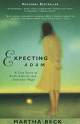
Expecting Adam is about Martha Beck's experiences while she was pregnant with her son, Adam, who was born with Down Syndrome. She recounts incredible spiritual experiences that occurred many times and yet she still seems so unsure of any reason why or how or who. I found it interesting that she seemed content to still be so agnostic. She said "or whatever" so many times in this book and I wanted to scream out loud, "don't you care to know?" She has decided that the who, what, where doesn't matter and is content with just "is". I guess I have a hard time believing her considering how she was raised and what she claims to have gone through. I don't buy her happy rehabilitated hippy self. I'm not saying I don't believe her memoir. Who am I to doubt a complete strangers memories? But I'm dubious of her motives in writing this book. She seems like she is trying to prove that she is the very vogue "spiritual" person now and not at all the very uncool religious person. This will sound petty but she mentioned Harvard, by name, hundreds of times. Hundreds. But anytime she mentioned her father or where she actually completed her dissertation, she just uses the phrase, "at the university where my father taught" as if actually typing Brigham Young University causes her pain and discomfort or somehow isn't a real school. Why? Is it that irrelevant? She did the same thing with other places in Utah. I just thought it interesting that a place where she grew up and that she tried to distance herself from so much doesn't even warrant a proper name. Just a description. Weird. It just didn't sit well with me and cast doubt on her hunky dorky attitude.

She is a gifted writer for sure. Very funny and enjoyable to read. And I agreed so much with her thoughts on why we are here - to interact and love each other. I wonder what it would have been like to read this book without knowing anything about the author. Without knowing that she also wrote a book called "Leaving the Saints" (which I haven't read) or that she was Hugh Nibley's daughter or that she now works for Oprah (I tell you...the entire time I was reading this I kept imaging Martha Beck to look like Oprah's new "Dr. Phil" - it was very disconcerting). I honestly think I would have liked it better. Interesting how my own prejudices influenced my reaction to a book. I am tempted to read her other stuff. Advice? Warnings?

Emma Hale Smith - Mormon Enigma


I feel like such a history buff. I read this at Shelah's suggestion and I'm glad I did. It's true that history changes depending on who wrote it because this book has a very different feel than the Bushman book on Joseph Smith I read a couple of months ago. I think Emma Smith must have been a force to be reckoned with. She was a strong, opinionated, independent woman at a time when those characteristics in a female were much more rare. I would truly love to have a chance to talk with her. From accounts given in this biography, she was a very charitable being, a doting mother and well educated. Someone the prophet loved and needed the good opinion of. What frustrated me when reading this, however, were all of the second hand accounts of her life. She didn't keep a history or journal and the only time her voice is heard is in letters. Her later years, when she fell out of favor with the Utah saints, were tainted by reports of missionaries traveling through Nauvoo with an interest in checking up on her. She had no desire to be checked up on and seemed to make an effort to appear unfriendly and changed from the woman many of them knew and loved.

So much of this book deals with polygamy. I honestly don't know if I would have reacted any differently than Emma if put in her situation. I guess I'm glad I don't have to find out. It's interesting to me to see polygamy come up in the news and entertainment. As church members, we find the practice appalling because it is against the commandments....now. We distance ourselves from the fundamentalists who show up in the news and make comments about how they are NOT mormon. But it was a commandment at one time. Emma couldn't get her heart or brain around it and upon the death of her husband, felt she needed to distance herself from the leadership she knew would continue the practice she found so abhorrent. Others, like her, fell away from the church or were ex-communicated due to misunderstanding or unlawful engagement of the practice. Today, the opposite is true. And it boils down to faith in a prophet. Did Joseph Smith receive a revelation about it? Did Wilford Woodruff? Gordon B. Hinckley? Emma was so close to Joseph she must have saw so much of the man as well as the prophet in him. She was convinced that he was deceived regarding the revelation of polygamy...that it was not from Heavenly Father. But the twelve, most importantly Brigham Young, saw otherwise.

Oh...so much to think about. Thanks for the suggestion, Shelah. I'm sure I wouldn't have read it otherwise.